
How Indian Hospitals Are Using AI, CRM, SaaS & Digital Marketing to Transform Healthcare
Innodify Admin
Author
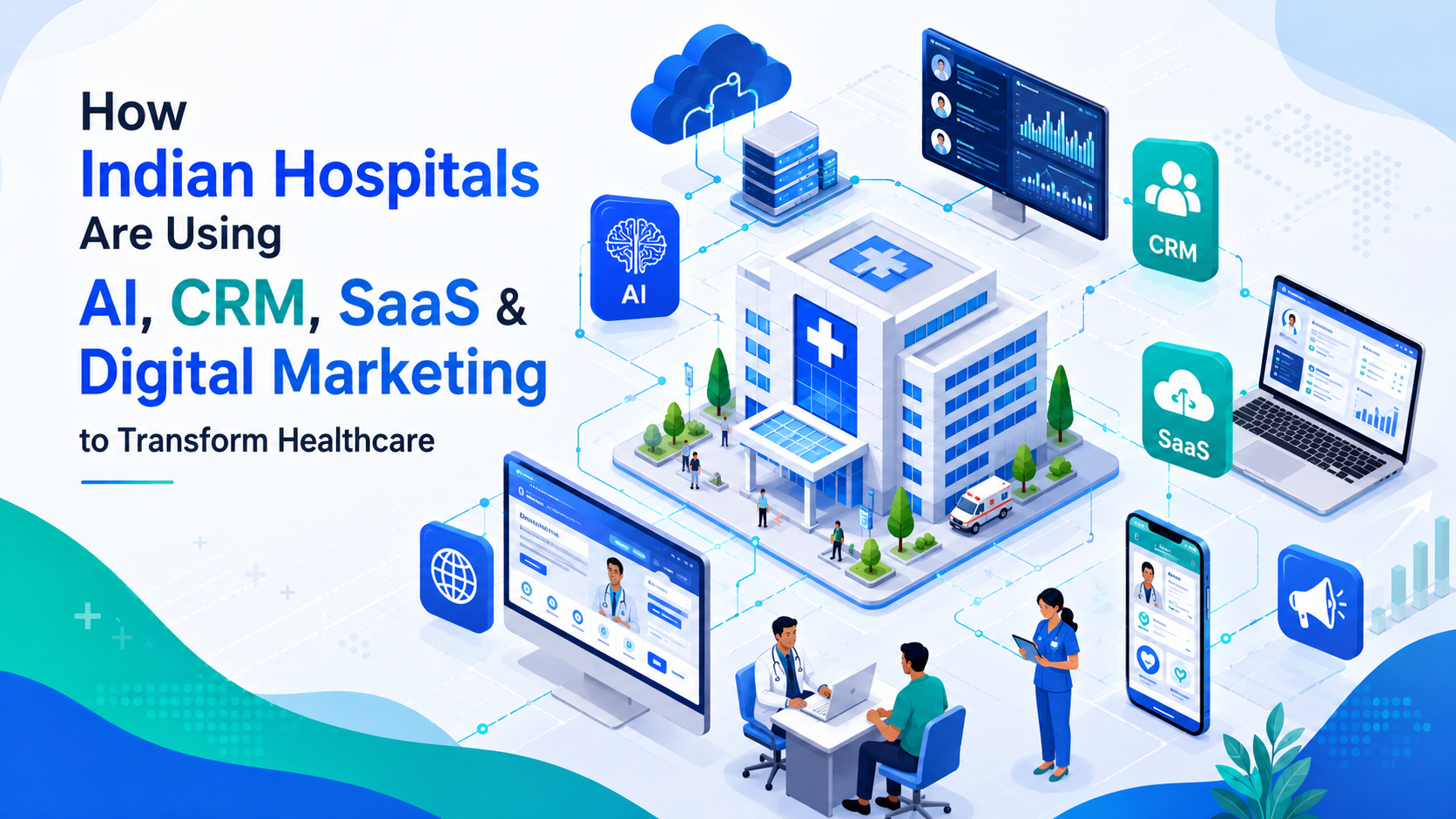
India's healthcare system is undergoing one of the fastest digital transformations of any industry in the country. Hospitals and clinics that once relied on paper registers and word-of-mouth are now investing in mobile apps, CRM systems, SaaS platforms, and healthcare technology powered by artificial intelligence to run their operations and reach patients online. Machine learning in healthcare gets most of the headlines, but the real transformation happening across AI in Indian hospitals is broader it's a full digital overhaul of how they operate, market themselves, and stay connected to patients.
This shift is being driven by two things at once. Patients now expect the same digital convenience from a hospital that they get from any other service booking, tracking, and communicating online and hospitals themselves are under pressure to run leaner, fill more appointment slots, and compete for patients in an increasingly crowded market, especially in tier-2 and tier-3 cities where new private hospitals and clinics are opening every year.
Here's a closer look at how Indian hospitals are actually modernizing today, and where the biggest opportunities are for healthcare providers who want to keep up.
1. Custom App Development Is Becoming the New Front Door
For a growing number of Indian hospitals, the patient relationship no longer starts at the reception desk it starts on a mobile app. Patients want to book appointments, view lab reports, chat with a doctor, and get medication reminders without picking up the phone.
A well-built hospital or clinic app typically includes:
Appointment booking and rescheduling, synced in real time with doctor availability
Digital health records allow patients to access them anytime, instead of chasing physical reports
Teleconsultation is built directly into the app for follow-ups and minor concerns
Push notifications for appointment reminders, prescription refills, and test results
For hospitals still relying on a receptionist and a phone line, this is often the single highest-impact investment they can make it reduces no-shows, cuts down on staff workload, and gives patients a reason to stay loyal to one provider instead of shopping around.
Many of these apps now also layer in artificial intelligence in healthcare symptom-checker chatbots, AI-driven appointment triage, and automated report summaries, turning a simple booking app into a genuine healthcare AI solution.
This is exactly the kind of custom app development Innodify builds for healthcare clients, often paired with Innodify's AI solutions designed around a hospital's actual patient flow, not a generic template.
2. CRM Systems: Turning Patient Data Into Better Care and Retention
Most Indian hospitals even large ones still manage patient relationships across scattered spreadsheets, WhatsApp threads, and receptionist memory. A dedicated healthcare CRM changes that by giving every patient a single, trackable profile.
A hospital CRM makes it possible to:
Track a patient's full history — visits, prescriptions, follow-ups — in one place
Automate follow-up reminders for check-ups, vaccinations, or chronic condition monitoring
Segment patients for targeted communication (e.g., diabetic patients, maternity patients, senior citizens)
Give management visibility into which departments, doctors, or campaigns are driving the most patient volume
This matters more than it sounds. A hospital that can automatically remind a diabetic patient about their quarterly check-up, or flag a patient who hasn't returned after a procedure, is delivering better care while also protecting revenue that would otherwise quietly walk out the door.
The most advanced healthcare CRMs now apply machine learning in healthcare to predict which patients are at risk of missing appointments or lapsing on treatment, so hospital staff can intervene before it happens.
CRM implementation is one of the fastest ways for a mid-size hospital to professionalize how it manages patients, and it's a core part of Innodify's CRM development work for healthcare clients.
3. SaaS Applications: Running the Hospital Like a Modern Business
Beyond patient-facing tools, hospitals are increasingly adopting SaaS platforms to manage the business side of healthcare — scheduling, billing, inventory, staff management, and compliance reporting.
Custom or configured SaaS solutions help hospitals:
Automate scheduling across departments, reducing double-bookings and idle doctor time
Manage pharmacy and inventory with automatic reorder alerts, cutting down on stockouts and wastage
Streamline billing and insurance claims, reducing manual paperwork and payment delays
Centralize multi-branch operations, which is increasingly relevant as hospital chains and diagnostic centres expand into tier-2 and tier-3 cities
The advantage of SaaS over legacy hospital software is flexibility a cloud-based platform can be updated, scaled, and accessed from anywhere, without hospitals needing to maintain their own servers or IT infrastructure.
Innodify builds and customizes SaaS applications specifically for healthcare operations, so hospitals get software shaped around how they actually run, not a rigid off-the-shelf system.
4. Website Development: The First Impression That Decides Trust
Before a patient ever calls or visits, they search. A hospital's website is often the very first interaction a prospective patient has with the brand and in healthcare, where trust is everything, a slow, outdated, or confusing website actively costs patients.
A properly built hospital website should:
Load fast and work flawlessly on mobile, since most healthcare searches in India now happen on phones
Clearly list doctors, specialties, and services, with easy navigation to the right department
Include real appointment booking, not just a phone number buried in a footer
Build trust through credentials, patient reviews, and clear information not stock photography and vague claims
A modern, well-structured website isn't just a digital brochure anymore it's a conversion tool. Innodify designs and develops healthcare websites built around this exact goal: turning visitors into booked appointments.
5. SEO: Getting Found When Patients Are Searching
None of the above matters if patients can't find the hospital in the first place. Search engine optimization is what determines whether a hospital shows up when someone nearby searches "best cardiologist in [city]" or "24-hour emergency hospital near me."
Effective healthcare SEO typically covers:
Local SEO and Google Business Profile optimization, so the hospital ranks for "near me" searches
Service and specialty landing pages, targeting specific searches like "IVF treatment in Surat" or "knee replacement surgery cost"
Doctor profile pages, since patients frequently search for specific specialists by name and qualification
Educational blog content, which builds authority with Google over time and answers the questions patients are already searching for
SEO is a slower-burning strategy than paid ads, but it compounds a hospital that ranks well for its core specialties keeps generating appointment inquiries month after month without ongoing ad spend.
This is a core part of the content and SEO work Innodify does for healthcare brands, including structuring service pages and blog content around what patients are actually searching for.
6. Ads: Filling the Gap While SEO Builds Momentum
SEO takes months to show results, which is exactly why most hospitals also need paid advertising running in parallel especially for high-value services like fertility treatment, cosmetic procedures, or specialty surgeries where competition is intense.
A well-run healthcare ad strategy usually includes:
Google Search ads targeting high-intent keywords tied to specific procedures or specialties
Local service ads to capture "near me" and emergency-driven searches
Retargeting campaigns for website visitors who didn't book an appointment the first time
Meta ads for awareness campaigns around health camps, seasonal check-up drives, or new department launches
The key with healthcare ads is precision poorly targeted campaigns burn budget fast in a competitive space. Landing pages matter just as much as targeting: sending ad traffic to a generic homepage instead of a dedicated, procedure-specific page is one of the most common ways hospitals waste ad spend.
Innodify manages ad campaigns designed around actual booking outcomes, not just clicks and impressions, so hospitals can see a clear return on ad spend.
How These Pieces Work Together
None of these app, CRM, SaaS, website, SEO, ads deliver their full value in isolation. A hospital that runs great ads but sends traffic to a slow, outdated website loses most of those leads. A hospital with a great app but no CRM has no way to track whether patients are actually returning.
The real transformation happens when these pieces are connected: a patient discovers the hospital through SEO or ads, converts on a fast, trustworthy website, gets tracked and nurtured through a CRM, and stays engaged through a branded app with SaaS tools quietly keeping the whole operation running efficiently behind the scenes.
This is the gap Innodify is built to close for healthcare providers not selling one piece of technology, but building a connected digital ecosystem around how a hospital actually attracts, converts, and retains patients.
Final Thoughts
Digital transformation in Indian healthcare isn't just about flashy artificial intelligence in healthcare demos anymore it's about hospitals and clinics getting the fundamentals right: a fast website, a working CRM, a patient-friendly app, visibility on Google, and ads that actually convert, with healthcare AI solutions layered in wherever they genuinely improve patient experience or operations.
The providers who invest in modern healthcare technology now are the ones who'll be capturing patient volume for years to come, while competitors are still relying on a phone line and a walk-in reception desk.
If you're a hospital, clinic, or diagnostics provider looking to build a connected digital presence app development, CRM, SaaS tools, website, SEO, ads, or AI-powered features Innodify can help you design and build it around how your team actually works.
Talk to Innodify about healthcare AI solutions and digital transformation.
Recommended for you
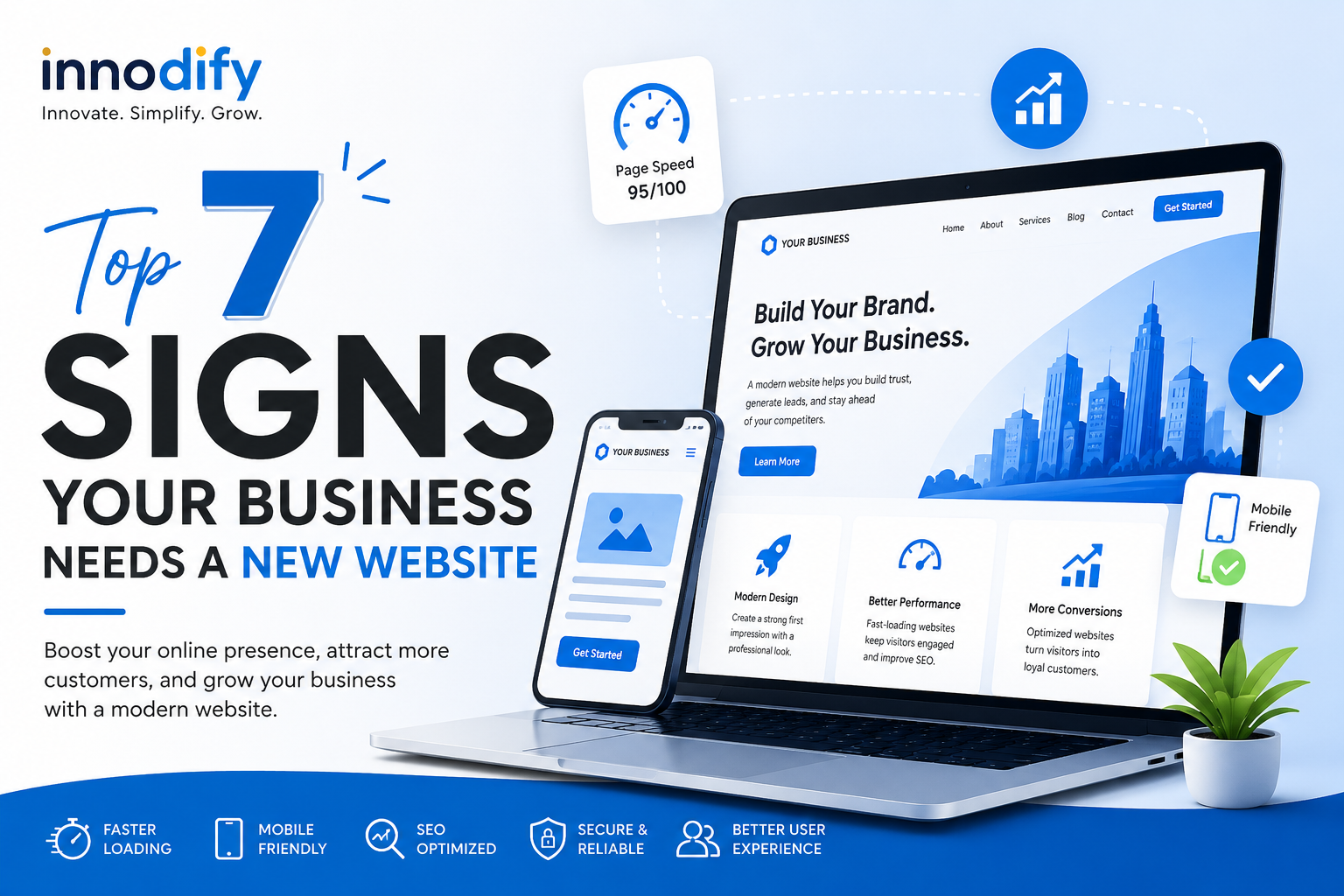
Top 7 Signs Your Business Needs a New Website
Is your website helping your business grow or driving customers away? An outdated, slow, or non-mobile-friendly website can hurt your credibility, reduce conversions, and lower your Google rankings. In this blog, we explore the top 7 signs that indicate it’s time to redesign or rebuild your business website. From poor user experience and slow loading speeds to weak SEO performance and low lead generation, these warning signs can directly impact your revenue.
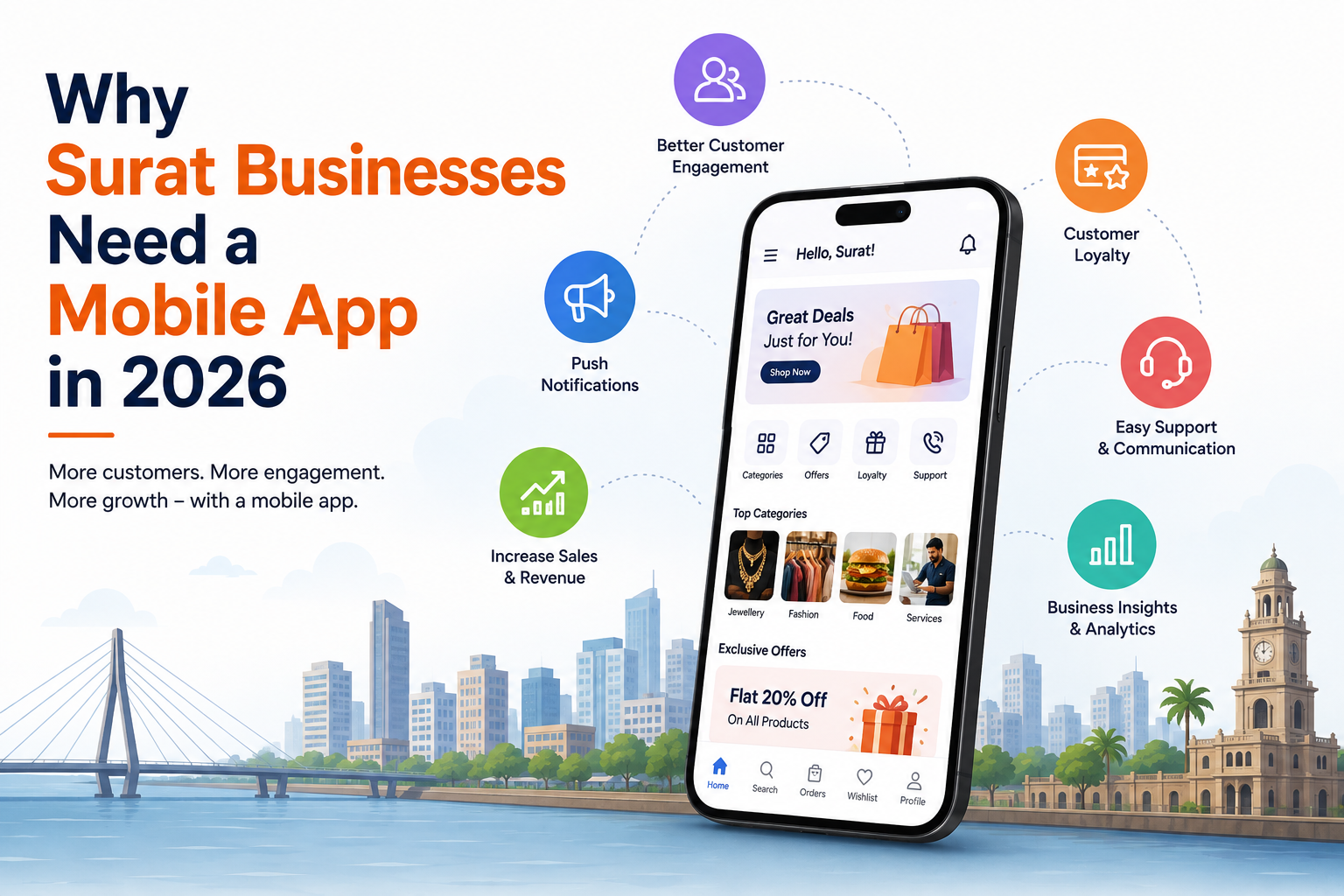
Why Surat Businesses Need a Mobile App in 2026 (Real Examples)
Surat businesses across jewellery, restaurants, fashion and services are moving to mobile apps in 2026. Here is why, with real-world examples of how a business mobile app in Surat drives customer retention and growth.
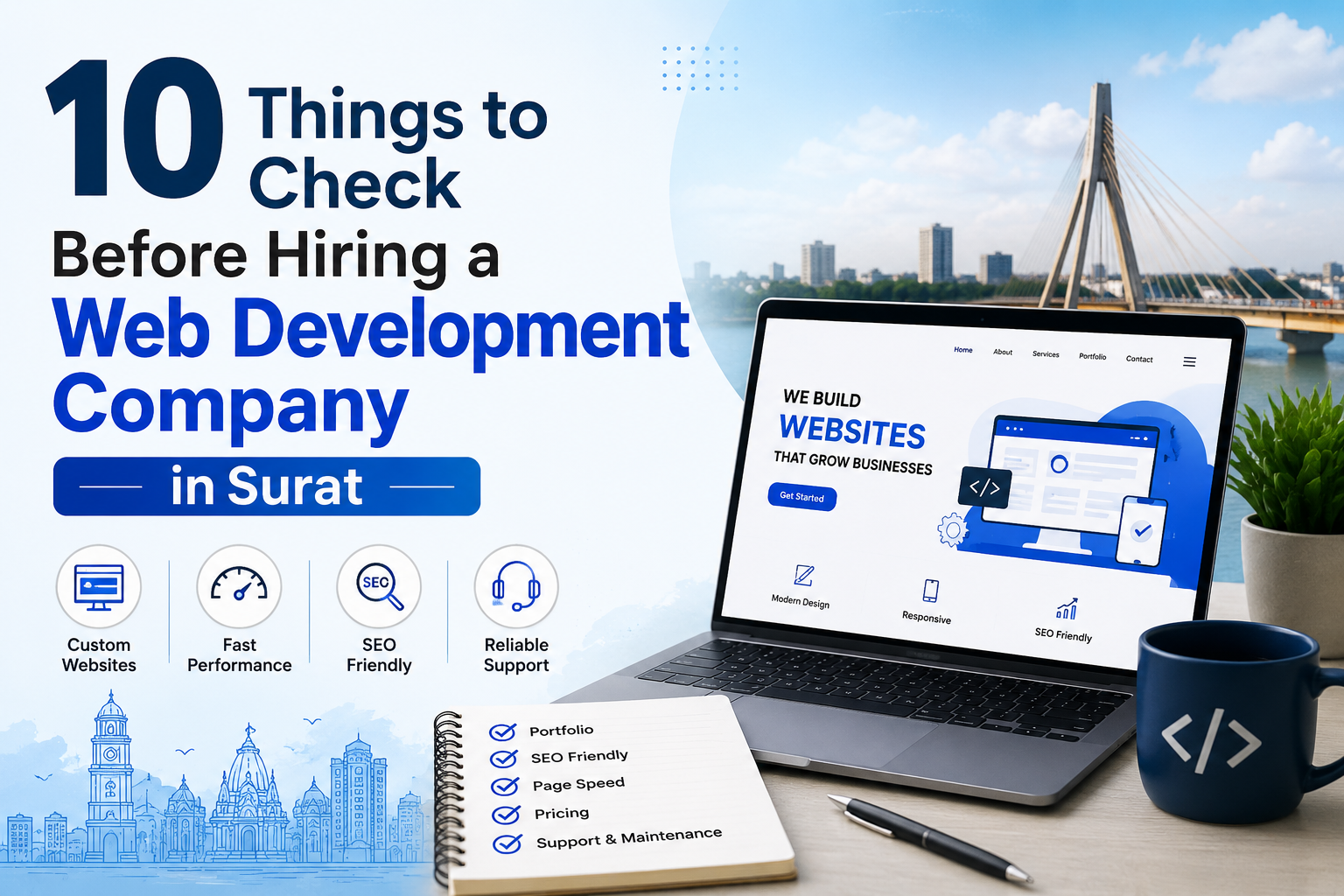
10 Things to Check Before Hiring a Web Development Company in Surat
Hiring the wrong web development agency can cost you time, money, and rankings. Here are 10 things every business owner in Surat should check before signing a contract.